How to Safely Trim Tall Trees Using the Best Pole Saw
Trimming tall trees is one of those garden jobs that looks simple from the ground but quickly becomes dangerous without the right tool and technique. Every year, thousands of people injure themselves trying to prune high branches from ladders or with tools that were never designed for the task.
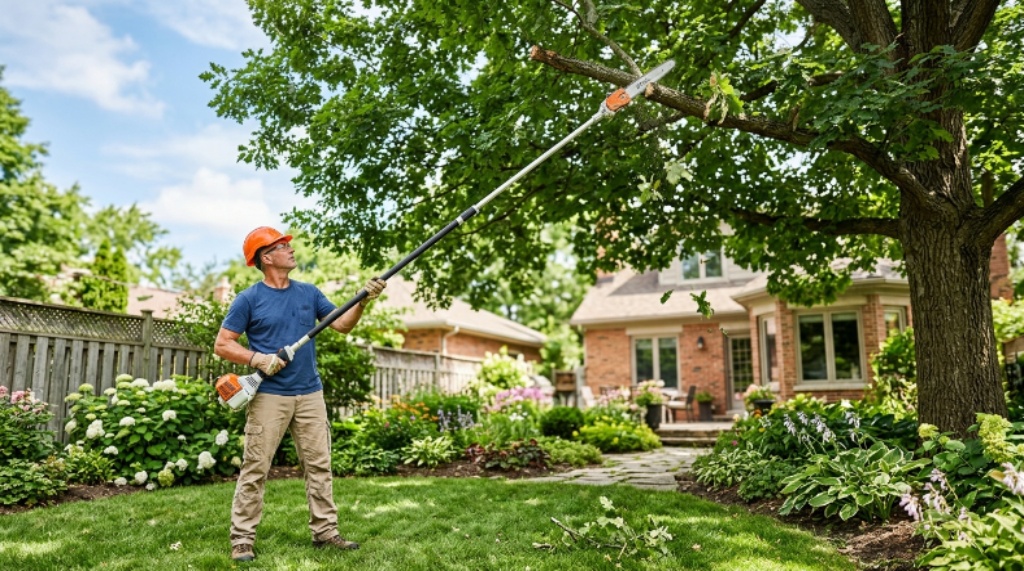
The right approach keeps your feet firmly on the ground. A quality pole saw lets you cut branches at height without climbing, balancing, or overreaching. However, owning the tool is only half the equation. Knowing how to use it safely and effectively is equally important.
This guide covers everything you need to know. From choosing the right saw to making clean, safe cuts on the tallest branches in your garden, you will finish this article ready to tackle the job with confidence.
Why Ground-Level Trimming Is Always the Safer Choice
Ladder accidents are among the most common causes of serious injury in home gardens. A moment of imbalance while holding a cutting tool at height is all it takes. The combination of a sharp blade, an unstable platform, and a heavy falling branch creates serious risk, even for experienced gardeners.
Trimming from the ground eliminates that risk almost entirely. You maintain full balance, both hands remain in control of the tool, and you can move freely to avoid falling debris. Therefore, any tool that keeps you safely on the ground is worth understanding and investing in properly.
Additionally, ground-level trimming is simply faster. You can move around the tree without repositioning a ladder, assess your cuts from multiple angles, and work for longer without fatigue. The job becomes less stressful and more productive at the same time.
Understanding the Different Types of Pole Saws
Not all pole saws are built the same. Before buying or borrowing one, it helps to understand the main types available and what each one is best suited for.
Manual Pole Saws
A manual pole saw uses a serrated blade that cuts on the pull stroke. There is no motor or battery involved. These tools are quiet, lightweight, and require no charging or fueling. They work well for occasional pruning of branches up to around 10 centimetres in diameter.
However, manual saws require more physical effort, especially on thicker branches or during long sessions. They are a good choice for lighter maintenance work and for gardeners who prefer simplicity.
Electric and Cordless Pole Saws
Electric pole saws use a motorised chain bar, similar to a small chainsaw, mounted at the end of an extendable pole. Corded models provide consistent power but limit your range of movement. Cordless battery-powered models offer far more freedom and have improved significantly in power and run time over recent years.
These tools cut faster than manual saws and handle thicker branches with much less effort. They are ideal for regular pruning work and for dealing with dense or hardwood growth.
Petrol-Powered Pole Saws
Petrol models deliver the most cutting power of all. They handle the thickest branches and run indefinitely without recharging. However, they are heavier, louder, and produce exhaust fumes. Additionally, they require more maintenance than electric alternatives. For most home gardeners, a cordless electric model offers a better balance of power and usability.
What to Look for When Choosing a Pole Saw
Choosing the right pole saw for your trees and garden takes a little thought. Several key features separate a great tool from a frustrating one.
Reach and Extension Range
The most important feature is how high the tool can reach. An extendable pole saw with a telescoping shaft allows you to adjust the length for different tasks. Most quality models extend to between 3 and 6 metres. When combined with your arm reach and height, that gives you access to branches at 8 metres or more without leaving the ground.
Always check the minimum and maximum extension lengths before buying. A tool that only extends to 3 metres may not be enough for larger, mature trees in your garden.
Blade or Bar Length
For manual saws, the blade length determines how quickly you can work through a branch. A 35 to 40 centimetre blade is a good all-round size. For powered models, the guide bar length affects the maximum branch diameter you can cut. A 20 to 25 centimetre bar handles most garden branches comfortably.
Weight and Balance
A heavy tool becomes exhausting to hold overhead within minutes. Look for models that balance the weight between the top and bottom of the pole. Some manufacturers position the battery or motor at the handle end specifically to reduce fatigue. For any session longer than 30 minutes, weight distribution matters as much as raw cutting power.
Build Quality and Locking Mechanism
The joint where the pole sections lock together takes significant stress during cutting. A poor-quality locking mechanism can slip or wobble, making the tool unsafe and inaccurate. Test this feature carefully, or read detailed reviews before purchasing. A solid, wobble-free connection is non-negotiable for safe operation.
Essential Safety Rules Before You Start Cutting
No matter how good your tool is, safety depends on following the right procedures. These rules apply every time you use a pole saw, regardless of experience level.
- Always wear a helmet or hard hat to protect against falling branches and debris.
- Put on safety glasses or a face shield to guard against wood chips and sawdust.
- Use heavy-duty gloves to protect your hands from vibration and sharp edges.
- Wear steel-capped boots in case a branch falls directly downward.
- Keep all bystanders, pets, and children well outside the drop zone before cutting.
- Never work directly beneath the branch you are cutting. Stand to the side so falling wood cannot land on you.
- Check overhead for power lines before extending your pole. Electric contact is immediately life-threatening.
- Inspect your tool before each use. Check the blade, locking joints, and any safety guards.
Additionally, never use a pole saw in wet or windy conditions. Wet handles reduce grip, wet wood behaves unpredictably, and wind can push a falling branch in an unexpected direction. Always work in calm, dry weather.
How to Make Clean, Safe Cuts on Tall Branches
Good cutting technique protects both you and the tree. Ragged or poorly positioned cuts invite disease and create weak regrowth. Following the correct method gives the tree the best chance of healing cleanly.
Identify the Branch Collar First
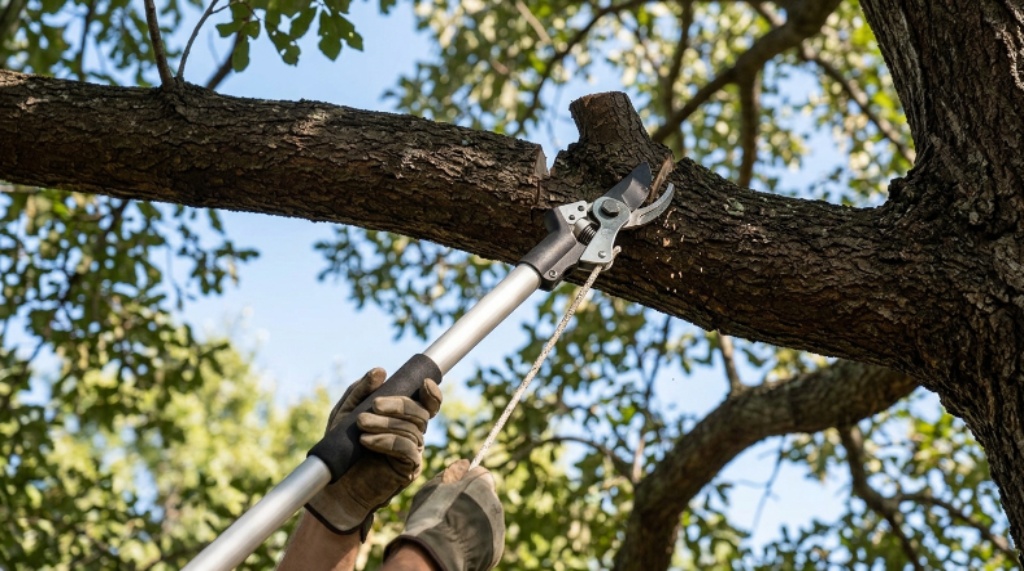
The branch collar is the slightly raised ring of bark where the branch meets the trunk or a larger limb. Always cut just outside this collar, never flush with the trunk. Cutting through the collar damages the tree’s natural healing tissue and leaves a wound that may never close properly.
Use the Three-Cut Method for Heavy Branches
Heavy branches should never be cut in a single pass. The weight of the branch causes it to fall before the cut is complete, tearing bark downward and leaving a jagged, damaging wound.
Instead, use three cuts. First, make an undercut about 30 centimetres from the trunk, cutting upward about one-third of the way through the branch. Second, make a top cut slightly further out from the trunk, cutting downward until the branch drops cleanly. Third, remove the remaining stub just outside the branch collar with a single clean cut.
This method prevents bark tearing and leaves a clean, manageable wound for the tree to seal over time.
Keep the Blade Angle Consistent
When using a long reach pruner or pole saw, maintaining a consistent blade angle is harder than it sounds. The further the tool extends, the more leverage you need to apply, and the more the angle can drift. Move slowly and let the blade do the work. Forcing the cut causes the blade to wander and produces a ragged result.
For powered models, apply light pressure and allow the chain to cut at its own pace. Heavy-handed technique does not speed up the cut. It simply increases the risk of blade pinch, where the branch closes on the bar and traps the tool.
Maintaining Your Pole Saw After Each Use
A well-maintained tool lasts longer, performs better, and is safer to use. Taking ten minutes after each session to care for your pole saw pays dividends over time.
Wipe the blade or chain bar down with a clean cloth to remove sap, wood dust, and moisture. Sap builds up quickly and makes cutting less efficient. For manual saws, apply a light coat of blade oil to prevent rust. For powered models, check the chain tension and lubrication level before putting the tool away.
Inspect the telescoping joints and locking mechanism for any signs of wear or loosening. Tighten any fittings that feel less secure than usual. Store the tool in a dry place, away from direct sunlight, which degrades rubber grips and plastic components over time.
Additionally, sharpen manual saw blades at least once per season. A sharp blade requires less force, produces cleaner cuts, and reduces fatigue significantly. Replacement blades are available for most models and are inexpensive compared to buying a new tool.
Conclusion
Trimming tall trees safely is straightforward when you have the right tool and the right technique. Start by choosing an extendable pole saw that suits your trees, your budget, and your physical capacity. Prioritise reach, weight, and locking mechanism quality above all other features.
Follow every safety rule without exception. Wear protective gear, clear the area around your tree, and never work under the branch you are cutting. Use the three-cut method for heavy limbs and always cut just outside the branch collar to protect the tree’s long-term health.
A quality long reach pruner is one of the most practical tools a gardener can own. It keeps you safe, saves time, and produces results that a ladder and hand saw simply cannot match. With the guidance in this article, you are ready to approach your tallest trees with skill, care, and complete confidence.
Frequently Asked Questions
How high can a pole saw reach safely?
Most extendable pole saws reach between 3 and 6 metres in length. When combined with your own height and arm reach, this typically gives you access to branches at 8 to 9 metres above the ground. Always stay within the tool’s rated extension and never overreach to gain extra height.
Can I use a pole saw near power lines?
No. You should never use any pole saw, manual or powered, near overhead power lines. Contact with a live line is immediately life-threatening. If branches are growing into or near power lines, contact your electricity provider or a qualified arborist to handle the work safely.
What diameter branch can a pole saw cut?
Manual pole saws handle branches up to around 10 centimetres in diameter comfortably. Electric and cordless models typically manage 15 to 20 centimetres depending on the guide bar length. For branches larger than this, a ground-level chainsaw or professional arborist is a safer choice.
How do I stop the pole saw from getting stuck in the branch?
Blade pinch usually happens when a branch bends and closes around the cutting bar under its own weight. Use the three-cut method for any branch thick enough to flex under load. The undercut removes the weight before the final cut, preventing the branch from closing on the blade.
Is an electric or manual pole saw better for occasional home use?
For light, occasional pruning of smaller branches, a manual pole saw is perfectly adequate and far simpler to maintain. If you have a large garden, thick-branched trees, or plan to prune regularly, a cordless electric model saves time and effort and is worth the additional investment.