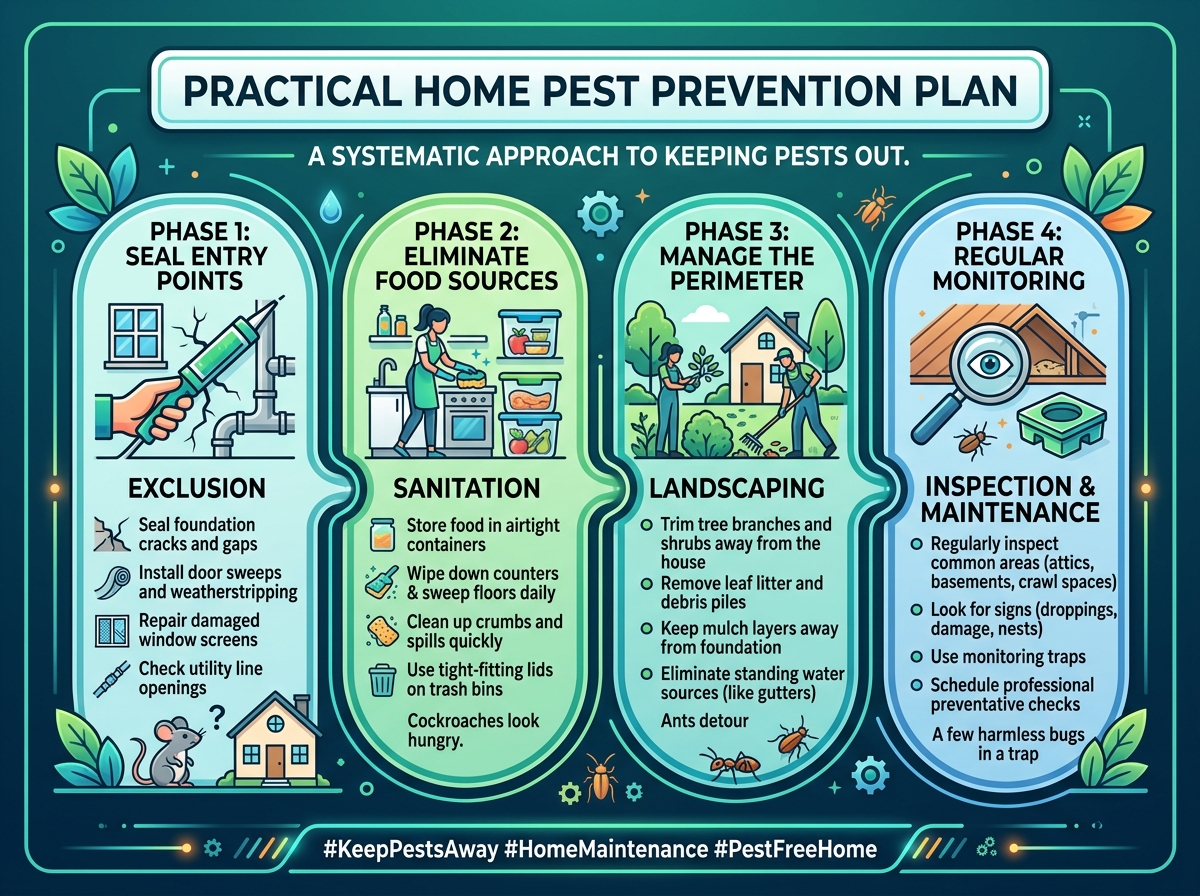
A Practical Home Pest Prevention Plan: Start With Habits, Not Sprays
A dependable pest prevention plan begins long before an infestation becomes obvious. Instead of reaching for a spray after seeing a few ants, flies, or droppings, focus on the conditions that make a home inviting in the first place. For homeowners who need help identifying persistent activity or building a prevention routine, Green Pest Services can be part of a broader strategy built around inspection, cleanup, repairs, and targeted control.
Most household pests look for the same essentials: food, moisture, shelter, and an easy way in. Removing those opportunities can reduce pest pressure without turning every small sighting into a chemical treatment project. The goal is not to create a perfectly sterile home. It is to make your home less convenient for unwanted visitors.
Why Prevention Works Better Than Panic Spraying
Prevention addresses the reason pests stay, while panic spraying may only affect the pests you can see. A leaking pipe can support cockroaches and silverfish. Open pantry foods can attract ants and pantry pests. Overgrown shrubs against siding can create protected travel routes for insects and rodents.
This approach follows integrated pest management principles, which emphasize accurate identification, monitoring, prevention, and lower-risk control methods before resorting to broader treatments. It saves effort because you are solving the underlying access or resource problem rather than simply reacting to each new sighting.
Step One: Inspect The Home From Top To Bottom
A monthly walk-through can reveal small issues before they become expensive or frustrating. Bring a flashlight, phone camera, and notepad. Focus on quiet, dark, damp, or cluttered spaces where pests can travel or hide.
- Check beneath sinks, around dishwashers, and behind refrigerators.
- Inspect basements, crawl spaces, attics, garages, and utility rooms.
- Look along window frames, door thresholds, vents, and foundation walls.
- Examine food storage areas for damaged packages, webbing, or small insects.
- Watch for droppings, shed skins, gnaw marks, grease marks, wings, or nesting material.
Take a photo of anything unusual before cleaning it up. A clear image, along with the location and date, can make it much easier to determine whether you are dealing with a one-time visitor or a recurring activity.

Step Two: Remove Food, Water, And Shelter
Strengthen Everyday Kitchen Habits
Small food sources are enough to support many pests. Wipe counters, sweep crumbs from floors, clean spills promptly, rinse recycling, and empty indoor trash regularly. Store flour, cereal, rice, pet food, and snacks in durable containers with tight-fitting lids rather than relying on thin bags or cardboard boxes.
Control Indoor Moisture
Water is often the missing piece in a pest problem. Repair drips under sinks, dry water around appliances, use bathroom exhaust fans, and inspect basement walls for dampness or condensation. Keep gutters clear and make sure downspouts direct water away from the foundation.
Reduce Clutter Where Pests Hide
Stacks of cardboard, paper bags, old fabric, and rarely moved storage create ideal hiding spaces. Use lidded plastic bins where practical, avoid storing items directly on the floor, and leave enough room around stored belongings to inspect walls and corners.
Step Three: Seal Common Pest Entry Points
A clean home can still have pests if the exterior has easy openings. Inspect the outside in spring and fall, as well as after storms or home repairs. Pay close attention to where siding, brick, roofing, pipes, wiring, and vents meet.
- Replace worn door sweeps and weatherstripping.
- Repair torn window and door screens.
- Seal small gaps around utility lines and outdoor faucets.
- Repair cracks in foundations, trim, and exterior caulking.
- Use appropriate mesh on vents while preserving needed airflow.
- Keep garage doors closed when they are not in use.
Do not overlook attic openings, dryer vent connections, and gaps beneath exterior doors. These areas can be particularly important when rodents seek warm shelter in cooler weather.
Step Four: Manage The Yard-Home Connection
The area immediately around a home can either deter pests or provide them with cover. Trim tree branches and shrubs away from siding and rooflines. Keep leaves, grass clippings, and excess mulch from collecting against the foundation. Store firewood raised off the ground and well away from the house.
Also, empty standing water from planters, toys, tarps, and outdoor containers. A healthy landscape does not need to be bare, but plants and moisture should not create a direct bridge between the yard and the structure.
Step Five: Monitor Pest Activity
Monitoring prevents guesswork. If you see a pest, note the date, room, approximate number, nearby food or moisture, and weather conditions. Sticky monitors placed in protected areas can help reveal patterns, especially near appliances, utility spaces, and garage walls. Keep all traps and monitors away from children and pets.
After making a repair or cleaning change, continue tracking activity for several weeks. Fewer sightings in the same location usually suggest that your prevention step is working. Continued activity may point to an overlooked entry point, moisture source, or nesting area.
Step Six: Choose The Least Disruptive Treatment
When prevention alone is not enough, treatment should be tailored to the pest and the location. Ant bait, for example, is not a solution for termites, bed bugs, or rodents. Misidentification can waste money and delay effective action. The least-hazard pest management approach starts with monitoring and prevention, then uses targeted controls when they are necessary.
Read every product label before use. Confirm that the pest and application area are listed, follow dosage and ventilation instructions, and never mix products unless the label specifically permits it. Seek professional help for structural damage, recurring infestations, pests inside walls or HVAC systems, or situations involving health and safety concerns.
A Simple Seasonal Pest Prevention Plan
Spring
- Clean gutters, inspect screens, and check for standing water.
- Trim plants away from walls, windows, and roof edges.
Summer
- Watch for ants, flies, mosquitoes, and stinging insects.
- Keep outdoor dining areas clean and pet food secured.
Fall
- Seal exterior cracks before temperatures drop.
- Move firewood, leaves, and stored items away from the foundation.
Winter
- Check attics, garages, and storage areas for signs of rodents.
- Inspect pipes and utility openings for moisture and gaps.
Common Questions About Home Pest Prevention
Should Every Pest Be Removed?
No. A single harmless insect may not require action. Consider whether it presents a health, food, property, or safety risk before choosing treatment.
How Often Should A Home Be Inspected?
A quick monthly check is useful for most homes. Plan a more complete inspection twice a year, after severe weather, or whenever repeated signs appear.
Are Natural Products Always Safer?
No. Natural products can still irritate skin, affect pets, harm beneficial insects, or cause trouble when misused. Safety depends on the product, dose, location, and application method.
Small Habits Can Make A Big Difference
Effective pest prevention is a repeatable cycle: inspect, remove food and moisture, seal openings, monitor activity, and use targeted treatment only when needed. These practical habits make it harder for pests to enter, feed, and settle in your home, while helping you respond calmly when a real problem arises.