What Are Mid-Term Rentals and Why Are Property Owners Paying Attention?
Mid-term rentals are fully furnished properties rented for periods typically ranging from one to six months. They sit between short-term vacation rentals and long-term leases, offering a flexible housing solution for tenants and a unique income strategy for property owners.
In recent years, mid-term rentals have surged in popularity. Remote work, travel nursing, corporate relocations, and insurance-related housing needs have reshaped how people live and work. Many tenants no longer want year-long commitments. At the same time, property owners are searching for stable income without the volatility of nightly bookings.
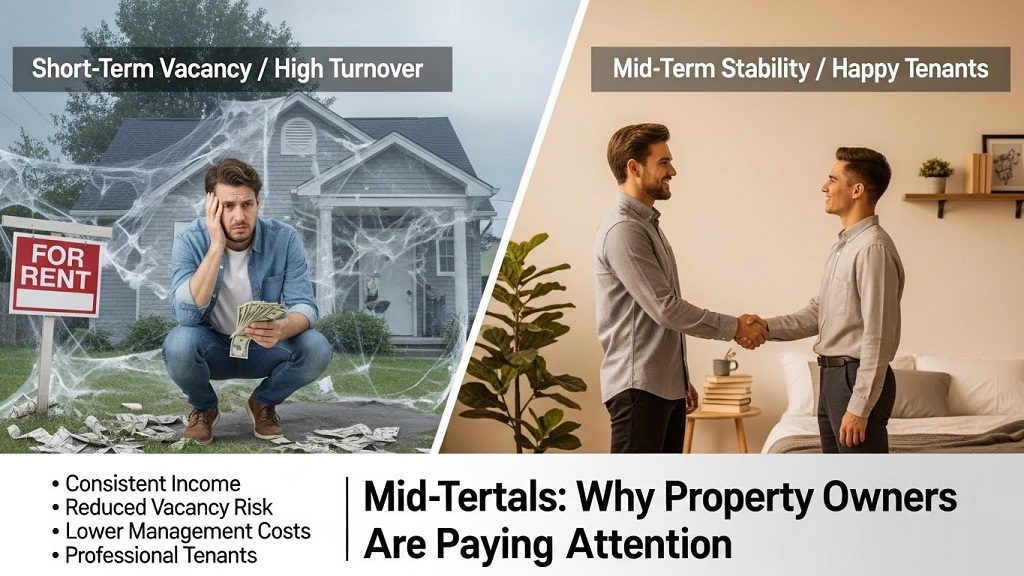
This shift has placed mid-term rentals squarely in the spotlight. They promise higher monthly income than traditional leases, fewer turnovers than short-term rentals, and often less regulatory pressure. But they are not without trade-offs.
This guide breaks down the mid-term rental pros and cons in clear, practical terms. You’ll learn when this model works best, where it can fall short, and how to decide if it aligns with your investment goals. If you’re weighing furnished rentals against other strategies, this article will help you make an informed decision.
How Do Mid-Term Rentals Work for Property Owners?
Quick answer: Property owners rent furnished homes to tenants staying 30–180 days, often charging monthly rates that include utilities and services.
Mid-term rentals operate on a monthly pricing model rather than nightly or annual leases. The property is usually move-in ready, with furniture, kitchenware, linens, Wi-Fi, and utilities bundled into one price.
Common tenant types include:
- Travel nurses and healthcare professionals
- Corporate employees on temporary assignments
- Families relocating or renovating homes
- Digital nomads and remote workers
- Insurance displacement tenants
Unlike short-term rentals, mid-term stays reduce guest churn. Unlike long-term rentals, they allow regular price adjustments and property access between tenants.
Understanding this structure is key to evaluating whether mid-term rentals fit your portfolio.

What Are the Biggest Advantages of Mid-Term Rentals?
Short answer: Higher income potential, fewer turnovers, flexible pricing, and reduced regulatory risk.
1. Can Mid-Term Rentals Generate Higher Income Than Long-Term Leases?
Yes, in many markets, mid-term rentals outperform traditional leases. Monthly rates are often 20–50% higher because tenants pay for convenience, flexibility, and furnishings.
Property owners can also adjust pricing between stays. This protects income during inflationary periods or rising demand cycles.
2. Do Mid-Term Rentals Mean Less Tenant Turnover?
Compared to short-term rentals, absolutely. Instead of weekly or nightly guest changes, mid-term rentals typically see 2–6 tenants per year.
Lower turnover means:
- Reduced cleaning and maintenance costs
- Less time managing bookings
- Lower wear and tear on the property
3. Are Mid-Term Rentals Easier to Manage Than Short-Term Rentals?
For many owners, yes. There’s no constant messaging, no daily pricing adjustments, and fewer emergency requests. Many mid-term tenants treat the property like a home, not a hotel.
This makes mid-term rentals especially attractive for self-managing owners or those scaling portfolios.
4. Do Mid-Term Rentals Face Fewer Legal Restrictions?
In many cities, mid-term rentals avoid strict short-term rental regulations because stays exceed 30 days. That means:
- No nightly rental bans
- Less licensing complexity
- Lower risk of sudden policy changes
While local laws still matter, furnished rentals often operate in a more stable legal environment.
What Are the Main Disadvantages of Mid-Term Rentals?
Short answer: Vacancy risk, furnishing costs, narrower tenant pools, and income gaps between stays.
1. Can Vacancies Hurt Mid-Term Rental Cash Flow?
Yes. Unlike long-term leases, there is no guaranteed 12-month income. If demand drops or marketing is weak, vacancies can last weeks or months.
This risk is highest in markets without strong corporate, healthcare, or relocation demand.
2. Are Furnishing Costs a Barrier for New Owners?
Furnishing a property is not cheap. Beds, sofas, appliances, cookware, and décor add up quickly.
Initial setup costs for furnished rentals can range from:
- $3,000–$6,000 for small units
- $8,000–$15,000 for larger homes
While these costs are often recovered over time, they can strain upfront budgets.
3. Is the Tenant Pool Smaller Than Other Rental Types?
Yes. Mid-term rentals serve a specific audience. If your property is in a purely residential or low-demand area, finding qualified tenants may take longer.
Marketing strategy and location matter more here than in traditional leasing.
4. Do Owners Still Cover Utilities and Services?
In most cases, yes. Utilities, internet, and sometimes cleaning are included in rent. Rising utility costs can eat into margins if pricing isn’t adjusted carefully.
How Do Mid-Term Rentals Compare to Short-Term and Long-Term Rentals?
Short answer: Mid-term rentals balance income, effort, and risk between the two extremes.
| Feature | Short-Term Rentals | Mid-Term Rentals | Long-Term Rentals |
|---|---|---|---|
| Average Stay | 1–14 nights | 1–6 months | 12+ months |
| Income Potential | High but volatile | Moderate to high | Stable but lower |
| Management Effort | High | Medium | Low |
| Furnishing Required | Yes | Yes | No |
| Regulatory Risk | High | Medium to low | Low |
This comparison highlights why many owners see mid-term rentals as a strategic middle ground.
Which Property Types Work Best for Mid-Term Rentals?
Short answer: Clean, furnished properties near hospitals, business hubs, and universities perform best.
Ideal mid-term rental properties include:
- One- and two-bedroom apartments
- Single-family homes in suburban areas
- Condos near medical centers
- Homes close to corporate offices or transit
Properties that offer parking, in-unit laundry, and strong internet connections tend to outperform others.
Who Should Consider Investing in Mid-Term Rentals?
Short answer: Owners seeking flexibility, balanced income, and lower daily management.
Mid-term rentals are well-suited for:
- Investors exiting short-term rentals due to regulations
- New landlords wanting higher returns than long-term leases
- Remote owners who prefer fewer turnovers
- Property owners testing flexible rental strategies
They may not be ideal for owners who need guaranteed monthly income or lack upfront furnishing capital.
How Can Property Owners Reduce the Risks of Mid-Term Rentals?
Short answer: Strong pricing, smart marketing, and clear lease terms.
Risk mitigation strategies include:
- Researching local demand drivers before investing
- Using flexible lease lengths to fill gaps
- Screening tenants thoroughly
- Adjusting pricing seasonally
- Building relationships with hospitals and employers
With the right systems, many of the common drawbacks become manageable.
What Is the Long-Term Outlook for Mid-Term Rentals?
Short answer: Strong demand driven by remote work and flexible living trends.
The rise of hybrid work, global mobility, and temporary relocation suggests that mid-term rentals are not a passing trend. Many experts see furnished rentals as a durable niche that will continue to grow.
Property owners who adapt early may benefit from less competition and more pricing power.
Conclusion: Are Mid-Term Rentals Worth It for Property Owners?
Mid-term rentals offer a compelling alternative to traditional leasing and short-term hosting. They blend flexibility, income potential, and operational balance in a way few other strategies can.
However, success is not automatic. Understanding the true mid-term rental pros and cons is essential. Furnishing costs, vacancy risk, and market demand must be evaluated honestly.
For property owners willing to position their homes correctly and market to the right tenants, mid-term rentals can deliver consistent returns without constant oversight.
Call to Action: If you’re exploring mid-term rentals or want to optimize an existing property, start by analyzing your local demand and running the numbers. The right strategy today can unlock flexible income for years to come.
Frequently Asked Questions About Mid-Term Rentals
What is considered a mid-term rental?
A mid-term rental is typically a furnished property rented for 30 days to six months, often with utilities included.
Are mid-term rentals more profitable than long-term rentals?
In many markets, yes. Mid-term rentals often generate higher monthly income due to flexibility and furnished pricing.
Do mid-term rentals require special leases?
Yes. Owners usually use fixed-term or month-to-month agreements tailored to furnished stays.
Who usually rents mid-term rentals?
Common tenants include travel nurses, corporate employees, relocating families, and remote workers.
Are mid-term rentals legal everywhere?
Laws vary by location. Many cities allow mid-term rentals with fewer restrictions than short-term rentals, but local regulations should always be checked.
Do mid-term rentals include utilities?
Most do. Utilities, internet, and sometimes cleaning are bundled into the monthly rent.
Related Topics: Navigating the Nuances of Wetland Landscaping
Related Topics: Exploring the Multi-Functionality of HARDELL 4V Rotary Tool