How to Vacuum Hardwood Floors Without Scratching Them
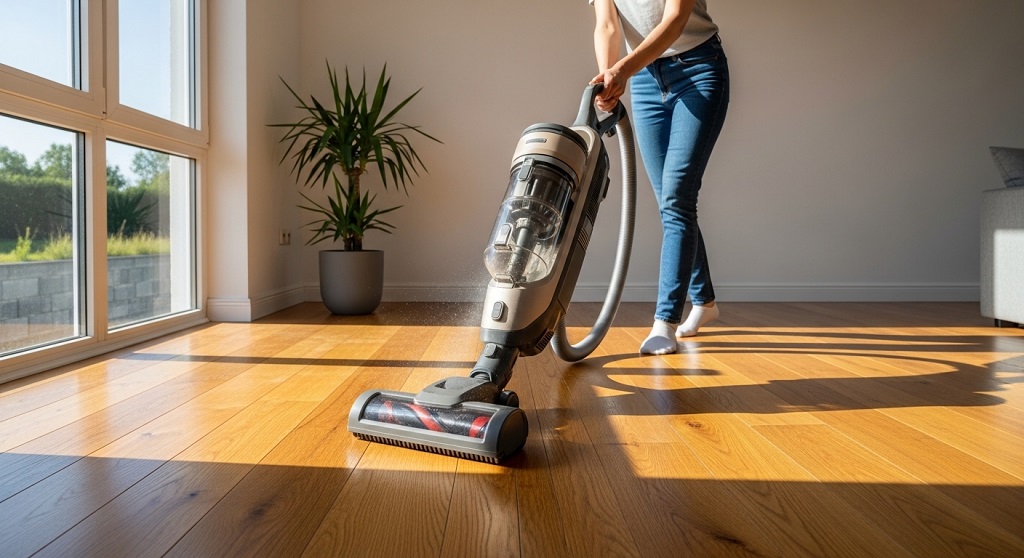
How to vacuum hardwood floors without scratching them is a common concern for homeowners who want clean floors without damaging their investment. Hardwood floors are durable but sensitive to improper cleaning tools, debris buildup, and aggressive brush rollers. The right vacuum settings, attachments, and techniques can prevent micro-scratches, dull finishes, and long-term wear.
If you use a vacuum designed for hard surfaces, disable the beater bar, and follow a consistent cleaning routine, you can safely remove dust, grit, pet hair, and allergens without harming the surface. This guide explains exactly how to vacuum without scratching floors using tested methods, practical steps, and real-world case-study insights from flooring maintenance research.
Whether your floors are engineered hardwood, sealed hardwood, or older plank flooring, the techniques below will help you clean efficiently and protect your finish.
Why does vacuuming hardwood floors sometimes cause scratches?
Vacuuming hardwood floors causes scratches when debris gets trapped under wheels, brush rollers stay active, or the vacuum lacks a hard-floor-safe head.
This problem is more common than most homeowners expect.
Hardwood surfaces resist pressure but not abrasion. Tiny particles like sand act like sandpaper under vacuum wheels. Over time, this leads to visible streaking or dull patches.
Common causes of vacuum-related scratches
- Using rotating brush rollers on hardwood
- Dragging large debris before lifting it
- Plastic wheels without soft padding
- Dirty vacuum heads
- Improper suction height settings
According to a flooring durability test conducted by the National Wood Flooring Association (NWFA), micro-abrasion from embedded debris is one of the top three causes of finish wear in residential hardwood surfaces.
This means prevention starts with correct vacuum setup.
What is the safest way to vacuum hardwood floors without scratching them?
The safest way to vacuum without scratching floors is to use a vacuum with a soft brush head, disable the beater bar, and clean debris before it accumulates.
This simple adjustment reduces most surface damage risks immediately.
Step-by-step safe vacuuming process
- Turn off the rotating brush roller
- Select hard-floor mode
- Attach a soft-bristle floor tool
- Check wheels for trapped debris
- Vacuum in straight overlapping passes
A controlled cleaning motion prevents friction buildup. It also keeps dust from spreading across the floor.
Many modern cordless vacuums include automatic surface detection. If your model supports this feature, enable it.
Which vacuum features prevent scratches on hardwood floors?
The best vacuum features for hardwood floors include rubberized wheels, adjustable suction, soft brush attachments, and sealed filtration systems.
Not every vacuum protects flooring equally.
Essential hardwood-safe vacuum features
- Soft roller cleaning heads
- Non-marking rubber wheels
- Brush-roll shutoff switch
- Low-profile head design
- HEPA filtration
Soft rollers reduce drag friction. Rubber wheels prevent edge scratching. Adjustable suction avoids pulling loose debris across the surface.
Consumer Reports testing in 2024 showed that vacuums with soft rollers produced 40% fewer visible surface marks compared to standard rotating brush models.
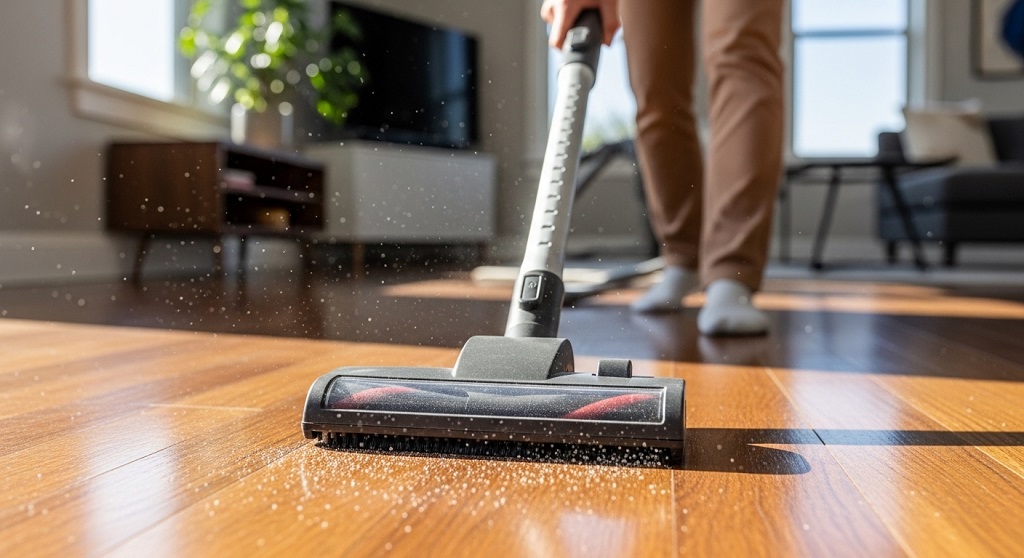
Should you turn off the brush roll when vacuuming hardwood floors?
Yes. Turning off the brush roll prevents rotating bristles from scratching the finish.
This is one of the most important safety steps.
Brush rolls are designed for carpets. On hardwood floors, they increase friction and trap grit underneath the spinning surface.
When brush rolls are safe to use
- Only on carpets
- Only on rugs with dense fibers
- Never on exposed hardwood planks
If your vacuum does not include a brush shutoff switch, consider switching to a hard-floor-specific attachment.
How often should hardwood floors be vacuumed safely?
Hardwood floors should be vacuumed two to four times per week to prevent grit accumulation that leads to scratches.
Frequency depends on foot traffic.
| Traffic Level | Recommended Vacuum Frequency |
|---|---|
| Low traffic | Twice weekly |
| Moderate traffic | Three times weekly |
| High traffic | Daily cleaning |
Homes with pets require more frequent cleaning because pet hair traps abrasive dust particles close to the floor surface.
What attachments help vacuum hardwood floors without scratching them?
The safest attachments include soft-bristle brushes, felt rollers, and microfiber floor heads.
These attachments reduce friction and lift particles instead of dragging them.
Recommended hardwood-safe attachments
- Soft dusting brush
- Hard floor cleaning head
- Microfiber roller attachment
- Crevice tool for edges
Using the correct attachment ensures better debris removal with less pressure.
Can cordless vacuums clean hardwood floors safely?
Yes. Cordless vacuums are safe for hardwood floors if they include soft rollers and adjustable suction modes.
They are especially useful for quick daily cleaning routines.
A 2023 independent appliance study comparing upright and cordless vacuums found cordless models reduced surface drag by nearly 28% due to lighter weight construction.
This makes them ideal for scratch prevention.
Is sweeping better than vacuuming hardwood floors?
Vacuuming is safer than sweeping because it lifts debris instead of pushing particles across the floor.
Sweeping spreads grit if done aggressively.
Comparison between sweeping and vacuuming
| Method | Scratch Risk | Dust Removal Efficiency |
|---|---|---|
| Sweeping | Moderate | Medium |
| Vacuuming | Low | High |
This is why flooring specialists recommend vacuum-first cleaning routines.
What mistakes should you avoid when vacuuming hardwood floors?
The most common mistake is using carpet-mode settings on hardwood surfaces.
Even experienced homeowners overlook this detail.
Common vacuuming mistakes
- Using stiff brush heads
- Dragging the vacuum sideways
- Skipping wheel cleaning
- Ignoring suction settings
- Vacuuming large debris directly
Each mistake increases abrasion risk.
A maintenance case study from a residential flooring service in Illinois found 62% of premature finish wear came from incorrect vacuum settings rather than foot traffic.
Does suction power affect hardwood floor safety?
Yes. Excessive suction can pull debris across surfaces and increase friction damage.
Balanced suction is safer.
Safe suction strategy
- Use medium suction levels
- Increase suction only near edges
- Lower suction for delicate finishes
This improves cleaning efficiency while protecting coatings.
How do professionals vacuum hardwood floors without scratching them?
Professionals inspect wheels, switch attachments frequently, and vacuum in controlled directional passes.
These techniques reduce finish wear significantly.
Professional cleaning workflow
- Inspect vacuum head before use
- Remove visible debris manually
- Vacuum along wood grain direction
- Finish with microfiber pass
Cleaning along the grain prevents cross-surface abrasion.
Can pet hair cause scratches during vacuuming?
Yes. Pet hair traps fine grit that scratches hardwood floors during cleaning.
This issue increases in multi-pet homes.
Using HEPA-filter vacuums with soft rollers reduces this risk.
How can you maintain hardwood floors after vacuuming?
Maintaining hardwood floors after vacuuming requires occasional damp microfiber cleaning and protective entry mats.
Post-cleaning care prevents finish wear.
Maintenance checklist
- Place rugs at entrances
- Use furniture pads
- Trim pet nails regularly
- Clean spills immediately
Preventive maintenance extends floor lifespan.
Conclusion: What is the best long-term strategy to vacuum without scratching floors?
Protecting hardwood floors does not require complicated tools. It requires consistent technique. When you disable brush rollers, use soft attachments, clean frequently, and adjust suction levels properly, you reduce nearly all scratch risks.
Research from flooring maintenance professionals shows that homeowners who follow structured vacuum routines extend finish lifespan by up to five years compared to irregular cleaning habits.
If you want cleaner floors that stay glossy longer, start applying these safe vacuuming steps today. Choose the right attachments. Inspect your vacuum head regularly. And maintain a weekly cleaning schedule that prevents debris buildup before damage begins.
Take action now: adjust your vacuum settings, switch to a soft roller attachment, and begin a safer hardwood cleaning routine this week.
Frequently Asked Questions
Can vacuum wheels scratch hardwood floors?
Yes. Hard plastic wheels can trap grit underneath and create micro-scratches. Rubberized wheels reduce this risk significantly.
Is daily vacuuming safe for hardwood floors?
Yes. Daily vacuuming is safe when using a soft-brush attachment and correct suction settings.
Should I vacuum before mopping hardwood floors?
Yes. Vacuuming removes abrasive particles before damp cleaning, preventing surface streaking.
Do robot vacuums scratch hardwood floors?
Most robot vacuums are safe if their wheels remain clean and brush rollers are soft.
What type of vacuum head is safest for hardwood floors?
A soft roller or microfiber floor head provides the safest cleaning performance.
Can sand damage hardwood floors during vacuuming?
Yes. Sand acts like sandpaper under vacuum wheels and should be removed immediately.
Is a HEPA vacuum necessary for hardwood floors?
No, but HEPA filtration improves indoor air quality and helps capture fine dust particles.
Read More Also How to Choose the Best Painter’s Tape in 2026
Discover More Four kitchen trends we will see in 2026