Why Front Doors Shift After Rain in Seattle, WA
Seattle experiences rainfall for much of the year, and that moisture affects more than roofs and gutters. Many homeowners notice their front doors suddenly stick, rub, or refuse to latch after heavy rain. In fact, Seattle receives roughly 38 inches of annual rainfall, while humidity often remains elevated throughout the year. As a result, moisture-related movement becomes a common concern for exterior entry systems. One overlooked sign involves exterior door frame separation, which often appears before larger alignment problems develop.
Understanding Why Front Doors Move After Rain
Front doors constantly respond to environmental conditions. Wood, composite materials, and even surrounding framing components expand when moisture levels rise. As rainwater saturates outdoor air, building materials absorb that moisture and change shape. Consequently, doors can shift slightly within their openings.
Many homeowners assume the door itself causes the problem. However, surrounding framing often contributes more movement than the slab. Moisture enters siding, trim, framing lumber, and threshold components. Therefore, the entire entry assembly may experience gradual changes.
Seattle’s climate creates ideal conditions for repeated expansion and contraction cycles. Unlike dry regions, moisture remains present for extended periods. As a result, materials rarely return to a fully dry state. Over time, small movements become more noticeable.
How Seattle’s Climate Affects Front Door Alignment
Rain alone does not create alignment issues. Instead, prolonged moisture exposure combines with temperature fluctuations and humidity. Seattle frequently experiences damp conditions that linger for days. Therefore, entry systems stay exposed longer than homeowners realize.
Many modern homes include advanced hardware and technology. However, proper door operation remains essential when installing devices such as door handle with smart lock solutions. If a door shifts after rain, electronic locking systems may struggle with alignment. Consequently, homeowners may mistake structural movement for hardware failure.
Seasonal weather patterns also play a major role. Winter storms increase moisture levels significantly. Meanwhile, warmer summer months allow partial drying. Because of these repeated cycles, door movement becomes an ongoing maintenance concern.
Humidity Plays a Bigger Role Than Rainfall
Many people focus only on visible rain. Yet indoor and outdoor humidity often causes greater expansion. Moisture remains suspended in the air even after storms end. Therefore, door materials continue absorbing water long afterward.
Wood fibers naturally react to changing moisture levels. When humidity increases, those fibers expand across the grain. As a result, dimensions change enough to affect operation. Even small changes can impact latching performance.
Common Signs Your Front Door Has Shifted
Recognizing early warning signs helps prevent larger repairs. Most homeowners notice subtle symptoms before severe movement occurs. Therefore, paying attention can save both time and money. Small issues rarely resolve themselves.
- Door sticks when opening or closing
- Latch misses the strike plate
- Uneven gaps around the door edges
- Drafts entering near the frame
- Visible cracks in trim or caulking
- Threshold rubbing against the door bottom
If several signs appear simultaneously, moisture-related movement may be occurring. Additionally, changes often become worse during wet periods. Once dry weather returns, symptoms may improve temporarily. However, the underlying cause usually remains.
The Hidden Impact of Foundation Moisture
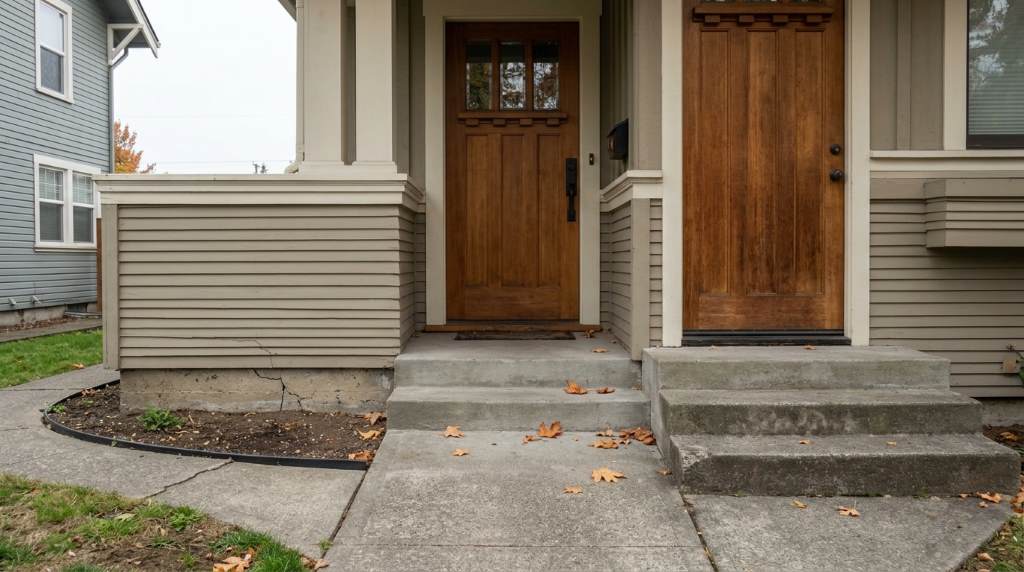
Many articles focus exclusively on the door itself. Yet Seattle homeowners should also consider foundation moisture. Rainwater can affect soil conditions around a home. Consequently, slight structural movement may occur over time.
When soil expands after heavy rainfall, pressure against foundations increases. Certain areas may shift more than others. Therefore, framing above the foundation can move slightly. Even minor structural changes influence door alignment.
This issue becomes more noticeable in older neighborhoods. Some homes have experienced decades of seasonal moisture exposure. As a result, settlement patterns continue evolving. Front doors often reveal these changes first.
Why Older Wooden Doors Experience More Problems
Wood remains a beautiful and popular entry door material. However, it reacts strongly to environmental conditions. Moisture absorption occurs naturally throughout its lifespan. Therefore, wood doors require consistent maintenance.
Older doors often contain areas where finishes have worn away. Water penetrates exposed surfaces more easily. Consequently, swelling occurs faster after rain events. The door may begin rubbing against the frame.
Previous repairs can also contribute to movement issues. Different wood species expand at different rates. As a result, patched sections may behave differently than original materials. This uneven movement creates additional stress.
An Overlooked Factor: Uneven Solar Exposure
One uncommon but important issue involves uneven sunlight exposure. Seattle’s cloudy reputation often hides this effect. Yet one side of a front door may receive more sunlight than the other. Therefore, drying occurs unevenly.
When one section dries faster, materials contract at different rates. Meanwhile, shaded portions retain moisture longer. This imbalance can gradually affect door alignment. Consequently, movement patterns become difficult to predict.
Homes facing different directions experience unique moisture cycles. South-facing entries often dry faster after storms. Conversely, north-facing entrances remain damp longer. These differences influence long-term performance.
How Soundproofing Projects Can Affect Door Performance
Many homeowners improve indoor comfort through insulation upgrades. Some projects include techniques for strategies for soundproofing rooms while reducing outside noise. Although beneficial, these improvements can alter airflow patterns around entryways. Consequently, moisture may remain trapped longer.
Reduced ventilation sometimes increases indoor humidity near the entrance. When moisture accumulates, wood components absorb additional water. Therefore, doors become more susceptible to swelling. Proper ventilation remains important during renovation projects.
The Role of Door Frames and Trim
Door slabs rarely move alone. Frames, casings, and trim pieces also respond to moisture. As these components expand, alignment changes become more pronounced. Therefore, inspection should include the entire assembly.
Exterior trim often absorbs water before interior materials do. Repeated wetting and drying can loosen fasteners. Consequently, small gaps may develop around the frame. These changes influence how the door operates.
Caulking failure creates additional problems. Water enters vulnerable joints and reaches framing members. As a result, swelling increases throughout the structure. Preventive maintenance reduces this risk significantly.
Door Size and Structural Tolerance Matter
Door dimensions influence how much movement becomes noticeable. Larger doors typically experience greater expansion. Therefore, even minor moisture absorption creates measurable changes. Wide entry systems require precise installation.
Builders often consider standards such as average door height for homes when designing entryways. Proper sizing helps maintain adequate clearance during seasonal movement. Consequently, doors continue operating smoothly despite environmental changes.
Insufficient clearance leaves little room for expansion. During wet weather, materials naturally increase in size. Therefore, friction develops between moving parts. The result often appears as sticking or dragging.
Practical Ways to Prevent Front Door Shifting
Prevention costs less than major repairs. Fortunately, several practical steps reduce moisture-related movement. Consistent maintenance provides the greatest benefits. Therefore, homeowners should establish regular inspection routines.
- Inspect weatherstripping twice each year
- Repaint exposed wood surfaces promptly
- Maintain gutters and downspouts properly
- Check caulking around trim annually
- Control indoor humidity levels
- Repair drainage problems quickly
These measures reduce moisture exposure significantly. Additionally, they extend the lifespan of entry systems. Small maintenance tasks often prevent larger structural concerns. Therefore, consistency matters more than complexity.
When Professional Evaluation Becomes Necessary
Some movement remains normal in Seattle’s climate. However, persistent alignment issues deserve professional attention. If doors remain difficult to operate, underlying structural problems may exist. Therefore, delaying repairs can increase costs.
Experts evaluate framing, moisture levels, and foundation conditions. They also inspect thresholds and hardware alignment. Consequently, they identify root causes rather than symptoms. Accurate diagnosis leads to effective solutions.
Professional moisture testing often reveals hidden concerns. Water intrusion may exist behind trim or siding. As a result, repairs address problems before significant damage develops. Early action protects long-term property value.
Long-Term Benefits of Addressing Door Movement Early
Ignoring minor shifts rarely saves money. Instead, small issues often grow worse with time. Moisture continues affecting vulnerable materials throughout the year. Therefore, proactive maintenance remains the best approach.
Well-maintained doors improve energy efficiency and security. They also create a better first impression for visitors. Consequently, homeowners enjoy greater comfort and reliability. Proper alignment supports long-term performance.
Seattle’s rainy climate presents unique challenges. Yet understanding how moisture affects entry systems helps homeowners respond effectively. With regular inspections and timely repairs, front doors can remain functional for many years.
Conclusion
Front doors shift after rain in Seattle because moisture affects wood, framing, foundations, and surrounding structural components. While some movement remains normal, recurring sticking, rubbing, or misalignment often signals deeper moisture-related issues. Regular maintenance, proper drainage, and early inspections help prevent costly repairs. If your entry door continues changing after wet weather, schedule a professional evaluation before the problem worsens. Taking action now protects your home’s comfort, security, and long-term value.
FAQs
Why does my front door stick only after rain?
Moisture causes door materials and surrounding framing to expand temporarily.
Can humidity affect a front door without direct rain?
Yes, high humidity alone can cause wood and framing components to swell.
Should I sand a swollen front door immediately?
No, identify the moisture source first because sanding may not solve the root problem.
Are fiberglass doors affected by Seattle weather?
Fiberglass doors resist moisture better but surrounding frames can still shift.
When should I call a professional?
Contact a professional if alignment problems persist after weather conditions improve.