How to Choose the Best Vacuum Cleaner for Restaurant Dining Rooms in 2026
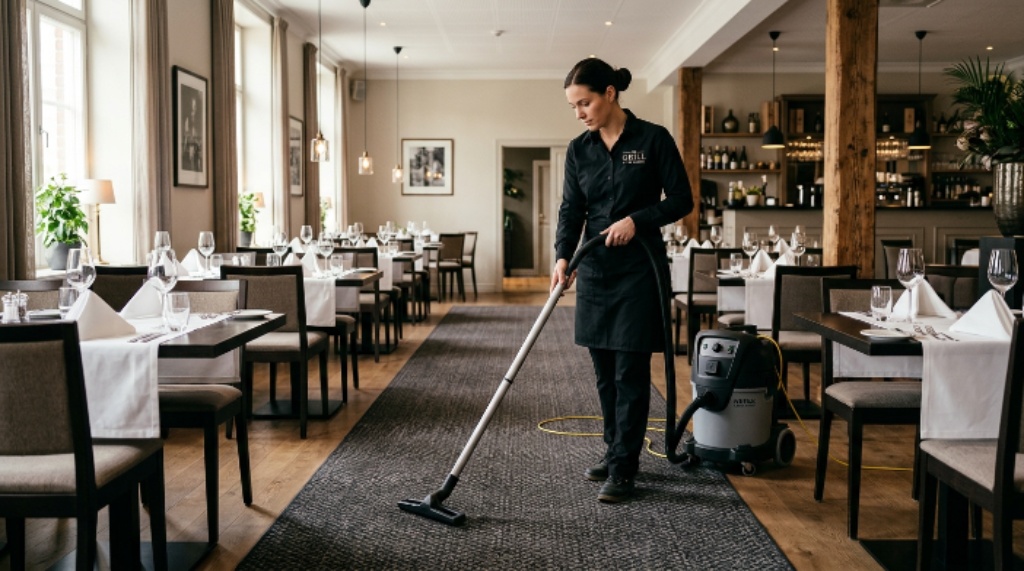
A clean dining room is one of the first things customers notice when they walk into a restaurant. It sets the tone for the entire experience. However, keeping a busy dining space spotless is not as simple as it sounds. Food crumbs, dust, hair, and debris accumulate fast — especially during and after service hours. Choosing the right vacuum cleaner can make this daily task faster, easier, and far less disruptive to your guests.
This guide will walk you through exactly what to look for when selecting a vacuum for your restaurant dining room in 2026.
Why Your Regular Home Vacuum Will Not Cut It
Many restaurant owners make the mistake of buying a standard household vacuum and expecting it to handle a commercial environment. The reality is different. Home vacuums are built for light, occasional use. A restaurant dining room sees constant foot traffic, spilled food, and heavy daily cleaning. Therefore, a domestic machine will wear out quickly and fail to deliver the deep clean your space needs.
Commercial environments demand tools built to last. They need stronger motors, larger dust capacities, and durable construction. Additionally, restaurant floors often include a mix of carpet, tile, and hardwood. Your vacuum needs to handle all of these surfaces without losing suction or damaging the flooring.
The Noise Factor: Why Quiet Performance Is Non-Negotiable
One of the most overlooked factors when choosing a restaurant vacuum is noise level. Restaurants are busy places. Cleaning often happens while guests are still seated, or just before new guests arrive. A loud, roaring vacuum can disturb diners, interrupt conversations, and create a poor atmosphere.
This is where a quiet vacuum cleaner becomes essential. In 2026, many commercial vacuum brands have invested heavily in noise-reduction technology. Some models operate at under 65 decibels — roughly the volume of a normal conversation. These machines allow staff to clean around occupied tables without drawing attention or causing discomfort.
When comparing models, always check the decibel rating listed in the product specifications. A quiet vacuum cleaner is not just a convenience — in a restaurant setting, it is a professional necessity.
Key Features to Look for in a Restaurant Vacuum
Not every commercial vacuum is suitable for a dining room environment. Some are designed for warehouses or large open spaces. Others are built specifically for hospitality settings. Here are the key features that matter most for restaurant use.
Strong and Consistent Suction
Suction power determines how effectively the vacuum picks up debris from different surfaces. Look for a motor rated at least 1,000 watts for consistent performance across carpet and hard floors. Suction that fades quickly forces staff to go over the same area multiple times, which wastes time.
Large Dust Capacity
A busy restaurant produces a lot of debris in a single service. A vacuum with a small dustbin will need to be emptied constantly, slowing down the cleaning process. Choose a model with a dustbin or bag capacity of at least two liters. Bagged models are often preferable in food environments because they seal in dust and allergens more effectively.
Multi-Surface Capability
Most restaurant dining rooms have more than one type of flooring. A good vacuum should switch easily between carpet and hard floors. Look for models with adjustable brush heads or automatic surface detection. This saves time and protects your floors from scratching.
Lightweight and Maneuverable Design
Dining rooms are full of tables, chairs, and tight corners. A heavy, bulky vacuum is difficult to maneuver around furniture. Stick vacuums and compact upright models tend to work well in these spaces. Additionally, vacuums with swivel heads make it easy to clean under and around table legs without moving furniture.
HEPA Filtration
Air quality matters in a food environment. A vacuum without proper filtration can release fine dust particles and allergens back into the air. HEPA filters trap 99.97 percent of particles as small as 0.3 microns. Therefore, always prioritize models with certified HEPA filtration, especially if your restaurant serves guests with allergies.
Types of Vacuums That Work Best in Dining Rooms
Understanding the different vacuum types will help you narrow down your options quickly.
Upright Vacuums
Upright models are powerful and cover large areas efficiently. They work especially well on carpeted dining rooms. However, they can be harder to maneuver in tight spaces between tables and chairs.
Stick Vacuums
Stick vacuums are lightweight and slim. They are easy to use in narrow spaces and require very little storage room. Many commercial stick vacuums now come with strong motors and long battery life, making them ideal for quick clean-ups between service periods.
Backpack Vacuums
Backpack vacuums are popular in the hospitality industry for good reason. The staff member carries the motor unit on their back, leaving both hands free to guide the hose. This design allows for fast, thorough cleaning of large dining areas. Additionally, backpack models tend to be among the quietest options available.
Canister Vacuums
Canister vacuums separate the motor from the cleaning head, which reduces vibration and noise. They are versatile and work well on both carpet and hard floors. The long hose makes it easy to reach under furniture and along baseboards without bending over.
Dining Room Cleaning Routines That Maximize Efficiency
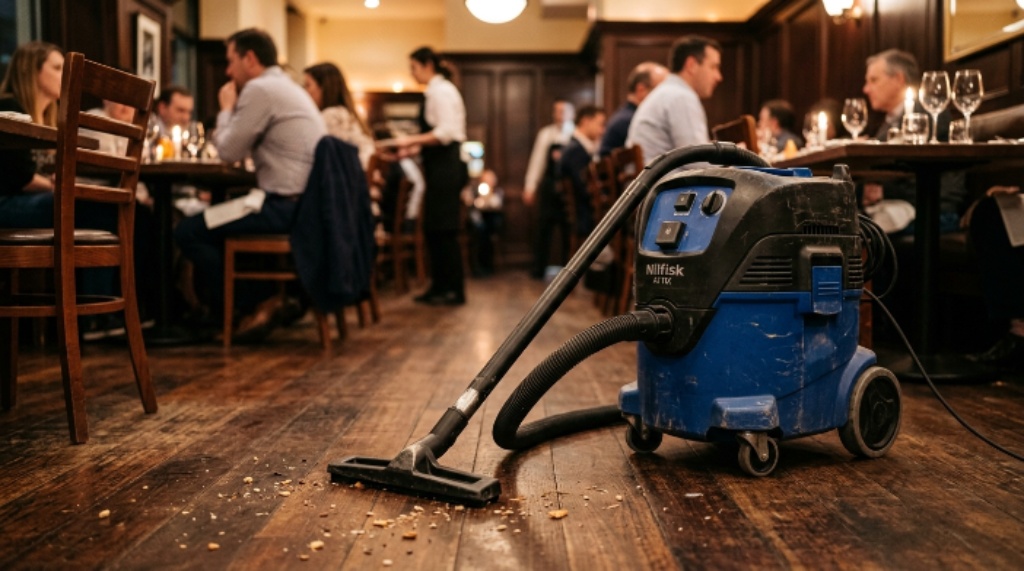
Having the right vacuum is only part of the equation. A smart dining room cleaning routine will help you get the most out of your equipment and maintain a consistently clean space.
Clean in a set pattern. Start from the far end of the room and work your way toward the exit. This prevents you from walking over already-cleaned areas. Additionally, always vacuum after the majority of guests have left a section, not mid-service.
Use the right attachment for each task. Most commercial vacuums come with multiple attachments. A crevice tool is ideal for cleaning along baseboards and between chair legs. A soft brush attachment works well on upholstered seating. Therefore, train your cleaning staff to use the correct attachment for each surface.
Empty the dustbin or replace the bag regularly. A full dustbin reduces suction and makes the vacuum work harder. This shortens the machine’s lifespan. Make it a habit to empty or replace after every major cleaning session.
What to Expect from Commercial Cleaning Tools in 2026
The commercial cleaning tools market has evolved significantly in recent years. In 2026, several trends are shaping the way restaurants approach hygiene and maintenance.
Smart vacuums with sensor technology can now detect debris concentration and automatically increase suction in heavily soiled areas. This means staff do not have to go back over missed spots manually. Some models also include digital indicators that alert users when filters need cleaning or when the dustbin is nearly full.
Cordless technology has also improved dramatically. Earlier cordless models struggled with battery life and suction power. However, modern lithium-ion batteries now last up to 90 minutes on a single charge and deliver consistent power throughout. This makes cordless commercial cleaning tools a genuinely practical option for full dining room coverage.
Sustainable design is another growing trend. Many brands now offer vacuums with washable filters, recyclable components, and energy-efficient motors. For restaurants focused on reducing their environmental footprint, these features are worth considering.
How Much Should You Budget?
Price is always a consideration. Quality commercial vacuums for restaurant use typically range from $200 to $800, depending on the brand, features, and type. Stick and canister models tend to sit at the lower end of this range. Backpack vacuums and high-end uprights with smart features sit higher.
However, think of this as a long-term investment. A cheap vacuum that breaks down after six months costs more in the long run than a durable model that lasts five years. Additionally, a vacuum that fails mid-service creates operational disruption and additional costs.
Look for brands that offer commercial warranties of at least one to two years. Reliable after-sale support is also a sign of a trustworthy manufacturer.
Conclusion
Choosing the right vacuum for your restaurant dining room requires more than just picking the most powerful model on the shelf. You need to consider noise levels, surface compatibility, filtration quality, maneuverability, and long-term durability. A quiet vacuum cleaner keeps your cleaning process discreet and guest-friendly. Strong filtration protects air quality in a food service environment. And the right type — whether upright, stick, canister, or backpack — depends on the size and layout of your specific space.
By investing in proper commercial cleaning tools and following a consistent dining room cleaning routine, you set your restaurant up for a higher standard of hygiene every single day. In 2026, the options available are better than ever. Take your time, compare features, and choose a vacuum that will serve your team and your guests well for years to come.
Frequently Asked Questions
How loud is too loud for a vacuum cleaner used in a restaurant dining room?
Any vacuum operating above 70 decibels can be disruptive in a dining environment. Look for models rated at 65 decibels or lower. This level allows cleaning to happen near guests without causing noticeable disturbance.
How often should a restaurant dining room be vacuumed?
High-traffic dining rooms should be vacuumed at least once between lunch and dinner service and again after closing. During very busy periods, quick spot vacuuming after each table turnover is also recommended.
Is a bagged or bagless vacuum better for a restaurant environment?
Bagged vacuums are generally better for food service environments. They contain dust and allergens more securely during disposal, which is important in a setting where hygiene and air quality are critical.
Can a regular household vacuum be used in a restaurant as a short-term solution?
A home vacuum can be used temporarily, but it is not designed for the frequency and intensity of commercial use. It will wear out faster and may not provide adequate filtration for a food service setting.
What is the best vacuum type for a restaurant with both carpet and hard flooring?
A canister or stick vacuum with a multi-surface brush head and adjustable settings is the most versatile choice. These models transition smoothly between surfaces without requiring a change of attachment or a separate machine.
Related Topics:
How to Keep Pests Out This Fall – Essential Tips
How to Store Brooms and Mops Without a Closet