Can You Use Copper Push Fit on Central Heating?
Key Takeaways
- Yes, most major push fit brands are approved for central heating use.
- Heating-rated fittings handle water up to around 92 degrees Celsius.
- Many manufacturers restrict push fit joints inside floors and walls.
- Always check your boiler warranty before using push fit fittings.
- Use heating-rated fittings with inhibitor, and keep joints accessible.
Last autumn, I decided to move a radiator in my home office. The old pipes ran right where my new desk needed to go. A heating engineer quoted me a small fortune for such a short job. Therefore, I decided to tackle it myself. Then I hit the same wall most DIYers face. My central heating pipes are copper, and my torch skills are poor. Additionally, soldering near wooden floorboards made me genuinely nervous. A friend suggested push-fit fittings, but I hesitated after reading warnings from industry specialists like Accurehome.com. Would they survive the heat of a central heating system? Would my boiler warranty survive too?
I spent a full evening reading manufacturer guides and boiler manuals. What I found surprised me. Push fit fittings are indeed approved for central heating, but with important conditions. My radiator move succeeded, and it has held perfectly through two winters since.
In this guide, I will share exactly what I learned. You will know when push fit works on heating, where it does not belong, and how to protect your warranty. Let’s dig in.
Can You Use Copper Push Fit on Central Heating?
Yes, you can use copper push fit fittings on central heating systems. Major brands like SharkBite and JG Speedfit make heating-rated versions of their fittings. These products are designed and certified for sealed heating circuits.
However, the answer comes with conditions. Regular push fit fittings made for cold water are not enough. You need fittings specifically rated for heating applications. The difference lies in the rubber seal inside. Heating-rated O-rings use compounds that resist constant high temperatures. Standard O-rings harden and crack over time when exposed to hot water.
Here is what heating-rated push fit fittings are built to handle:
- Continuous water temperatures up to around 92 degrees Celsius.
- Short-term spikes up to 110 degrees in some cases.
- System pressures typical of sealed central heating circuits.
- Heating system chemicals and corrosion inhibitors.
- Both copper and plastic heating pipes.
Central heating water typically runs between 60 and 80 degrees Celsius. Radiator circuits rarely exceed 85 degrees, even on the coldest days. Therefore, a fitting rated at 92 degrees covers normal operation with headroom to spare.
The Chartered Institute of Plumbing and Heating Engineering advises that any fitting must match the temperature and pressure of its intended system. This guidance applies doubly to heating, where failures happen slowly and hide for months. Additionally, heating water contains inhibitor chemicals, so the seals must resist those too.
One more point deserves mention. Push fit fittings work on both copper and plastic heating pipe. However, copper needs the same careful prep as always. Cut square, deburr, and insert to the full depth mark. Follow those rules, and the fitting will serve your heating system for years.
Understanding Temperature and Pressure Ratings
Ratings are the heart of this whole topic. Misunderstanding them is where people get into trouble. Therefore, let’s break the numbers down clearly.
Most heating-rated push fit fittings carry ratings similar to these:
- Continuous operation: 92 degrees Celsius at 3 bar.
- Short-term peaks: Up to 110 degrees Celsius briefly.
- Test pressure: Certified well beyond normal working pressure.
For context, a typical combi boiler heats water to around 70 to 80 degrees. Boiler safety valves usually release at 3 bar. So heating-rated fittings sit comfortably within real-world conditions.
Now compare this with standard cold-water push fit ratings. Basic fittings often top out near 65 to 70 degrees continuous. Slipping one onto a radiator pipe means the seal runs at its limit daily. Eventually, that O-ring hardens, cracks, and weeps. I found this distinction the hard way, when I almost bought cheap fittings for my radiator job. The packaging looked nearly identical. Only the small print revealed the difference.
Here is how to shop smart:
- Look for the words “heating rated” or a high temperature rating on the package.
- Check that the rating covers continuous use, not just brief peaks.
- Confirm approval for sealed heating systems specifically.
- Buy from the same brand for all fittings in one project.
Additionally, consider your system type. Sealed systems with combi boilers run at higher pressures than old open-vented systems. Both are fine for rated fittings. However, unvented hot water cylinders follow stricter rules entirely. Many manufacturers exclude push fit from cylinder connections. Therefore, read the fitting specifications, not just the box art.
Boiler flow temperatures also matter. Modern boilers with weather compensation often run cooler, around 50 to 60 degrees. Older systems may run hotter. Cooler systems give push fit seals an easier life. Consequently, fitting lifespan improves on modern setups.
Where Push Fit Fittings Belong on Heating Systems
Location matters just as much as the fitting itself. Even a certified fitting fails badly in the wrong place. Manufacturer guidance is very clear on this point.
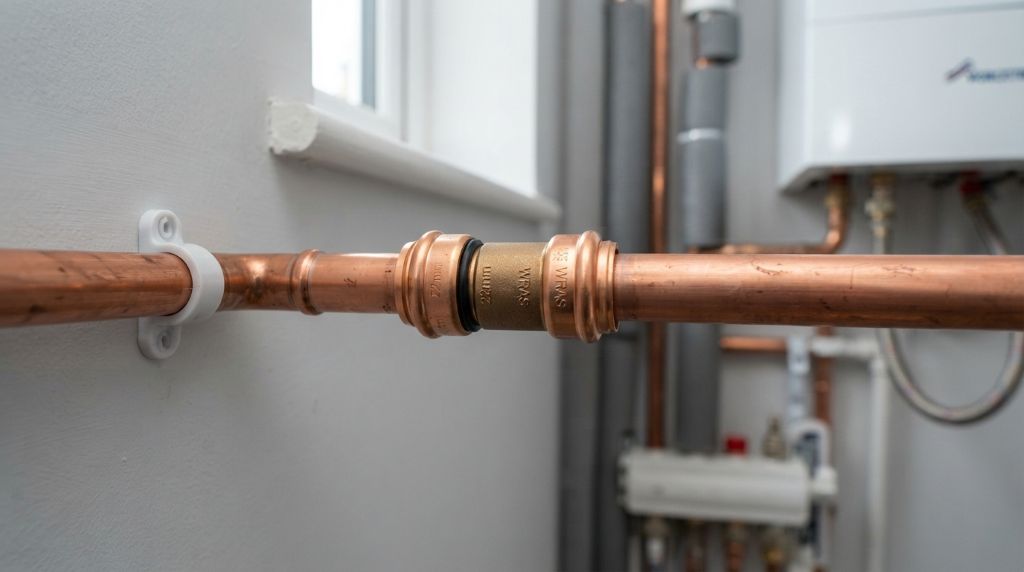
The biggest restriction involves hidden locations. Most manufacturers do not permit push fit joints in floor voids or wall cavities on heating systems. The reason is simple. Heating circuits run for decades at high temperatures. A joint behind plaster or under floorboards may leak unseen for months. By the time stains appear on ceilings, damage is extensive.
Here is where push fit fittings perform well:
- Accessible pipe runs in airing cupboards.
- Visible connections near the boiler or cylinder.
- Radiator pipe runs under suspended floors with access panels.
- Exposed runs along skirting boards.
- Any spot you can reach and inspect easily.
Here is where to avoid them:
- Sealed inside wall cavities.
- Buried in solid floors.
- Under floorboards without access panels.
- Inside boiler casings.
- Directly on unvented cylinder connections, unless explicitly approved.
The Water Regulations Advisory Scheme emphasizes that fittings must be accessible for inspection and maintenance in most situations. This principle protects your home from hidden failures. My own radiator project followed this rule. I placed my two push fit joints in the corner of the room, fully exposed behind the radiator. If they ever weep, I will see it the same day.
Older systems deserve extra caution. Sludge and debris often build up inside aging heating pipework. Pushing a fitting onto a sludge-coated pipe compromises the seal. Therefore, flush the pipe ends thoroughly before assembly. On very dirty systems, power flushing before any new work is wise. Clean pipe equals a clean seal.
Protecting Your Boiler Warranty and Meeting Regulations
This section could save you hundreds of pounds. Boiler warranties are valuable, and certain mistakes can void them. Understanding the rules keeps you covered.
Most boiler manufacturers honor warranties regardless of fitting type. However, they require work to follow regulations and manufacturer instructions. Problems arise when a fitting failure damages the boiler. For example, a hidden leak beneath a boiler can corrode its internals. In that case, the manufacturer may blame the installation, not the boiler.
Here are the warranty rules to follow:
- Read your boiler manual before starting any work.
- Never install fittings inside the boiler casing.
- Keep all connections near the boiler to approved types.
- Use a Gas Safe engineer for any work on gas lines or internal parts.
Regulations matter too. In the UK, most heating work must follow Building Regulations. Generally, replacing or extending radiator pipework counts as non-notifiable work. However, work involving the boiler itself usually requires a qualified engineer. Therefore, know where your project boundaries sit. Changing a radiator tail with push fit is one thing. Modifying boiler connections is another entirely.
Corrosion inhibitor deserves a mention here as well. Heating systems need chemical inhibitor to prevent rust and sludge. Quality push fit seals are compatible with common inhibitors. However, always confirm this on the manufacturer’s website. Additionally, top up inhibitor after draining and refilling the system. Fresh inhibitor protects both your new fittings and your radiators.
My own experience taught me the paperwork lesson. Before my radiator move, I photographed my boiler manual’s pipework section. I also saved the fitting specifications as PDFs. When I later sold the house, those documents answered the buyer’s surveyor instantly. Five minutes of record-keeping removed all doubt.
How to Install Push Fit on Heating Pipes Correctly
Installation technique decides whether your fittings last five years or thirty. Fortunately, the process is straightforward. Follow these steps carefully, and your joints will hold through countless heating seasons.
- Shut off the boiler and let the system cool completely.
- Drain the section of the circuit you are working on.
- Cut the copper pipe square using a proper pipe cutter.
- Deburr both the inner and outer edges thoroughly.
- Clean the pipe end until the copper shines.
- Check the fitting’s O-ring for nicks or dryness.
- Mark the insertion depth on the pipe with a pencil.
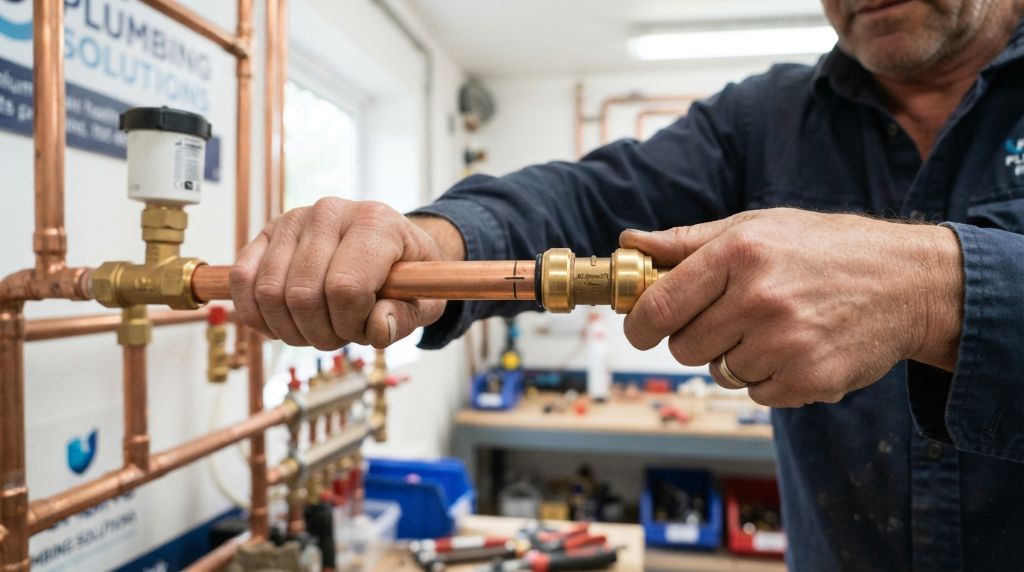
- Push the pipe straight in until it reaches the depth mark.
- Pull gently on the pipe to confirm the joint is locked.
- Refill the system, add inhibitor, and bleed all radiators.
The cooling and draining steps matter more on heating than on water pipes. Hot system water is scalding and under pressure. Therefore, never rush into a live heating circuit. Give radiators several hours to cool after the boiler switches off.
Bleeding the system afterward is equally important. Air trapped in pipes causes cold spots on radiators and noise in pipes. Bleed every radiator until water runs clear. Then check system pressure on the boiler gauge. Most sealed systems want around 1 to 1.5 bar when cold. Finally, run the heating and inspect every new joint under full temperature. Seals that hold hot water will certainly hold cold.
One extra tip from my project. Grip teeth in push fit fittings bite slightly differently on heating pipe. Give each joint a firm tug test before refilling. Additionally, support long pipe runs with clips near the fittings. Proper support stops pipe weight from stressing the seals over time.
Push Fit Versus Soldering and Compression for Heating
Push fit has clear strengths, but honest comparison helps you choose wisely. Each joining method suits different situations and budgets.
Soldered joints remain the gold standard for heating. A sweat joint is permanent, invisible, and compact. Additionally, it suits every location, including floor voids and walls. However, soldering demands skill, a torch, and drained pipes. Heating systems hold lots of water, and draining them fully takes real time.
Compression fittings offer a middle path. They need only wrenches and patience. Moreover, they are accepted in most hidden locations. However, they cost more per joint than basic fittings, and tight spaces make wrenching awkward.
Here is how push fit compares on key points:
- Speed: Push fit wins easily, with joints made in seconds.
- Cost per joint: Soldering is cheapest, push fit most expensive.
- Hidden locations: Soldering is safest, push fit is often restricted.
- Skill required: Push fit is easiest for beginners by far.
- Heat risk: Push fit needs no flame, which protects joists and floorboards.
- Disassembly: Push fit and compression can be removed, solder cannot.
For my radiator job, push fit was the obvious choice. The joints sat in an accessible corner, and I wanted no flame near floorboards. However, if I were re-piping an entire house, I would solder or press most joints. The economics and durability favor those methods at scale.
A blended approach often works best. Many heating engineers solder or press in hidden areas, then use push fit for accessible finishing. Therefore, do not feel committed to one method. Match the joint type to each location. That mindset gives you speed where safe and permanence where needed.
Conclusion
So, can you use copper push fit on central heating? Yes, when you choose heating-rated fittings and install them properly. The seals are built for high temperatures, and they handle system pressures and inhibitor chemicals without trouble.
The key rules are simple. Buy fittings rated for continuous heating temperatures. Keep joints accessible rather than buried in walls or floors. If you’re working with an older heating installation, it’s also worth considering the importance of replacing old pipe systems in your home. Check your boiler manual, and leave boiler-side work to a Gas Safe engineer. Follow those guidelines, and push fit will serve your heating system reliably for years.
My radiator move took one evening and a fraction of the quoted price. Two winters later, those joints remain dry and dependable. With the right fittings and technique, yours will too.
Have you used push fit fittings on your heating system? Did they hold up, or did you learn a lesson the hard way? Share your experience in the comments below. Additionally, if this guide helped you, share it with a friend planning a radiator project. Confidence with heating pipes starts with the right knowledge!
Frequently Asked Questions
Are standard push fit fittings safe for central heating?
No. Use fittings specifically rated for heating, with seals tested to around 92 degrees Celsius continuously.
Can push fit fittings go under floorboards on heating pipes?
Most manufacturers restrict hidden joints on heating circuits. Keep push fit joints accessible, or solder and press in concealed locations.
Will push fit fittings void my boiler warranty?
Not usually, if installed outside the boiler casing and to regulations. Always check your boiler manual before starting work.
What temperature can heating-rated push fit fittings handle?
Most handle continuous water temperatures up to about 92 degrees Celsius, with brief tolerance for higher spikes.
Do push fit fittings work with heating inhibitor chemicals?
Yes, quality heating-rated fittings are compatible with common corrosion inhibitors. Confirm compatibility on the manufacturer’s website.